AI Workflow Implementation
Take one job off your plate. Your team runs it, the same way every time.
I map how the job really gets done, use AI only where it helps, and build the whole path around your people, your records, and your approval.

I map how the job really gets done, use AI only where it helps, and build the whole path around your people, your records, and your approval.
The hard part of a recurring job usually lives between the steps: your judgment, an inbox holding the next move, a spreadsheet someone has to remember, a document you have to chase again. When it gets busy, it comes back to you. "I'll just do it."
You might already pay for AI. People might be using their own tools. And the job still runs the old way.
This starts with one job and the result it should produce. If the people, the data, the approvals, or a safe backup aren't there, I won't force AI into it.
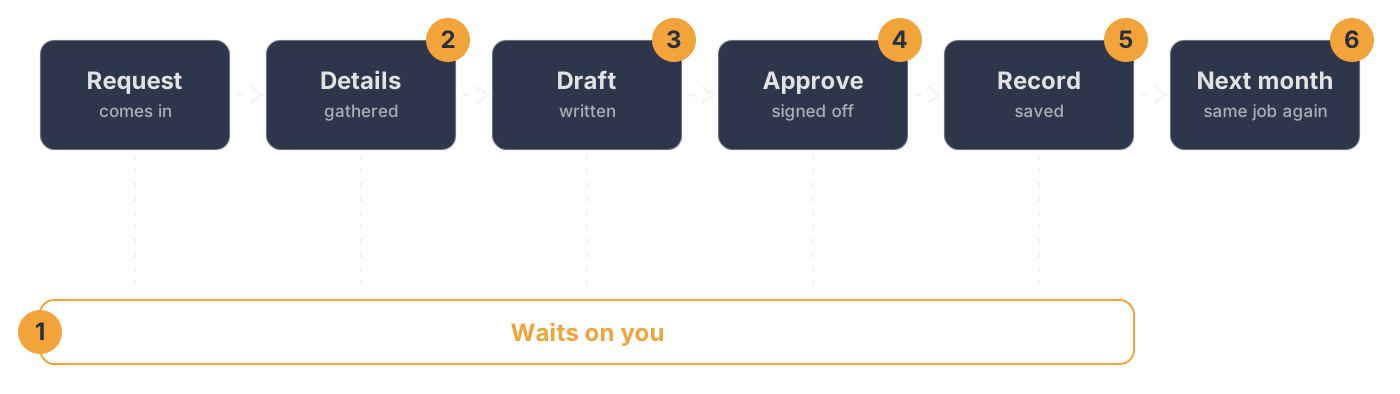
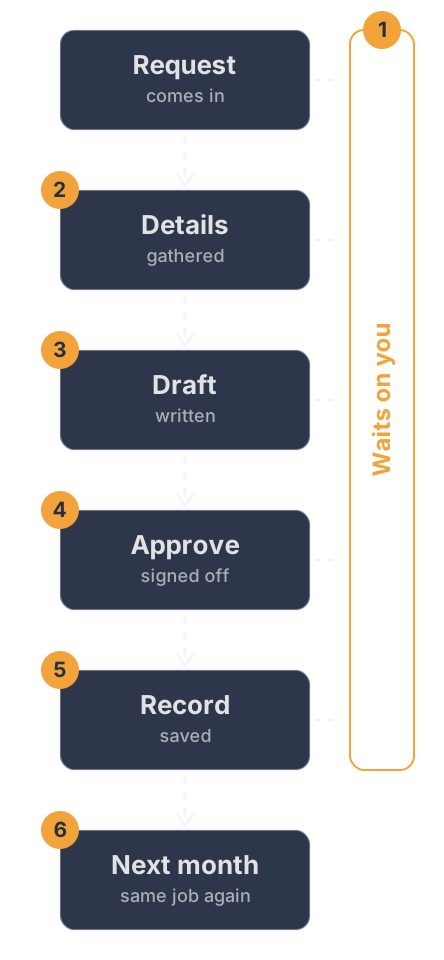

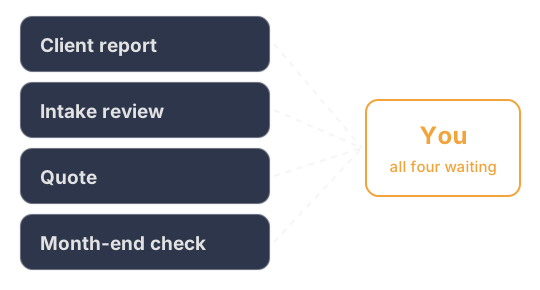
The request comes in, and somehow it ends up on your desk. You know which client needs what, where the template is, and what "done" looks like, because none of it is written down. When you're busy, the job waits. When you're out, it stops. "I'll just do it" has become the process.

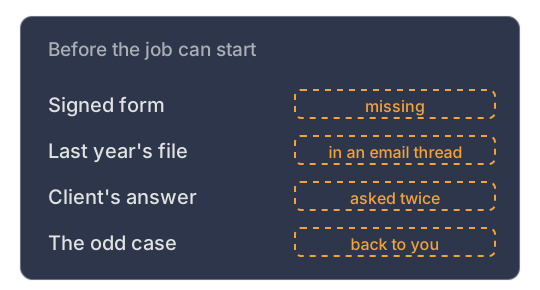
A document is missing. The form came back half filled out. The answer you need is buried in last month's email thread. Every job starts with a round of back-and-forth, and the odd cases, the ones that don't fit the usual pattern, land back on you.

There's a license, maybe two. People paste things into their own chat tools. It was useful the first week. But the job still runs the old way, through the same inbox and the same spreadsheet, because nothing was built around how the work actually gets done.
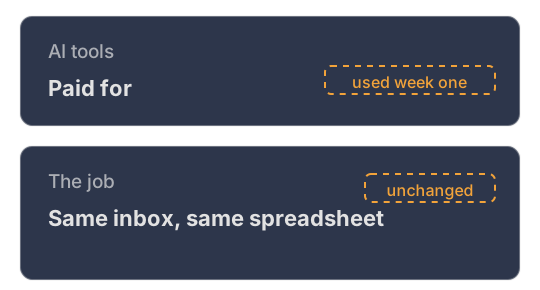

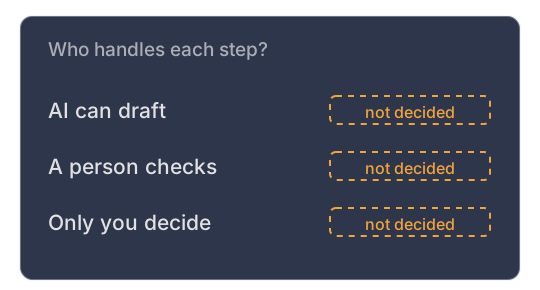
Either everything waits for your approval, or something goes out that shouldn't have. Nobody wrote down what AI can draft, what a person has to check, and what only you can decide. So you review all of it, or you worry about what you didn't.

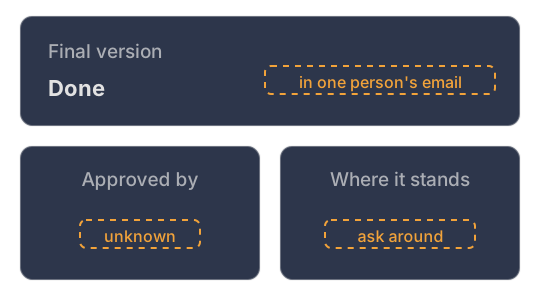
The job gets done, and the finished version sits in one person's email or on their desktop. The next time someone needs it, they ask around. There's no one place that shows what was done, who approved it, and where it stands.

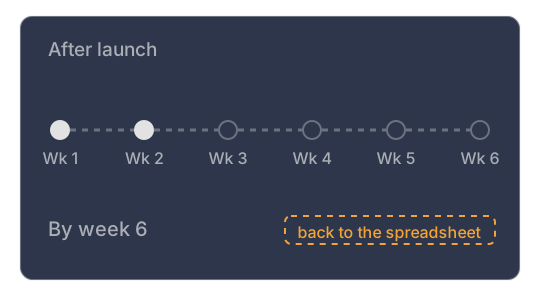
The new way launches. A few weeks later, part of the team is back in the spreadsheet, with a backup copy kept "just in case." Nobody owned fixing what didn't work, so the old way quietly became the default again.
AI Workflow Implementation takes one recurring job and rebuilds it around how the work really happens. AI drafts, sorts, and looks things up where it fits. A person keeps every decision that needs judgment. The result is recorded where your team can find it, and more than one person can run it.
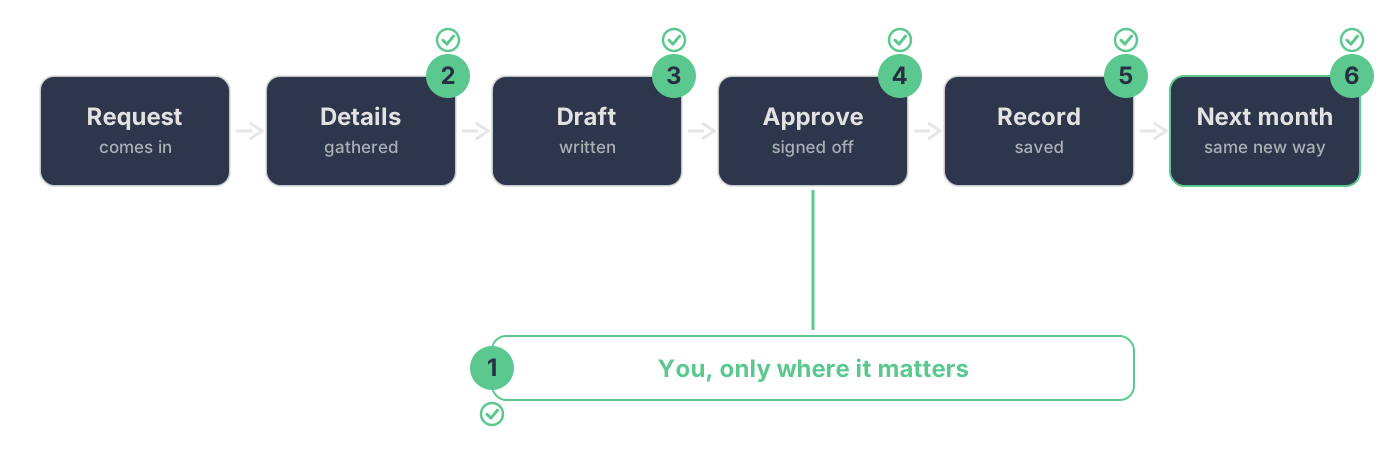
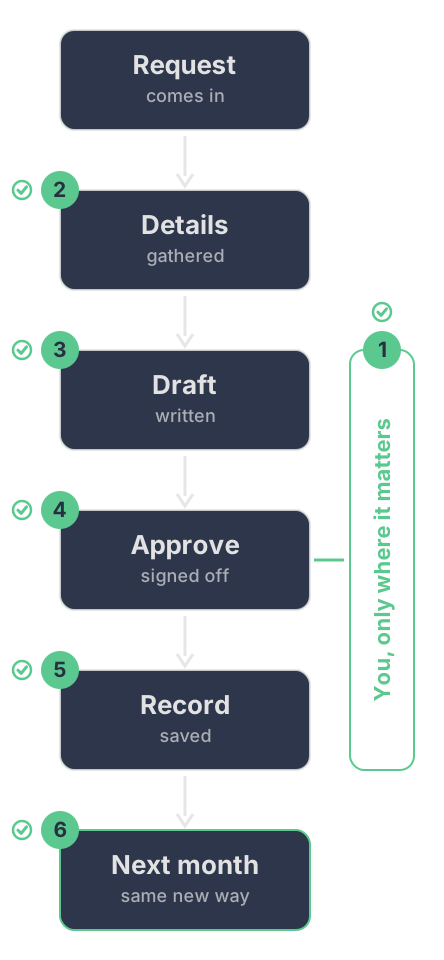

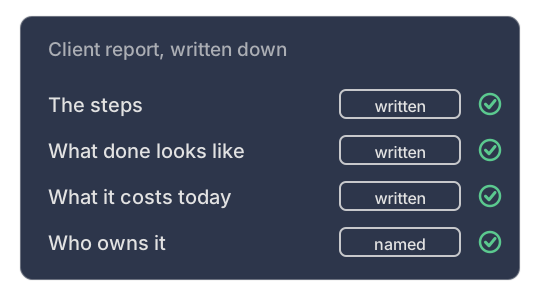
I follow the job the way it actually happens: the handoffs, the workarounds, the judgment calls, and where it waits. What "done" looks like, what the job costs today, and who owns it get written down, so it no longer lives only with you.

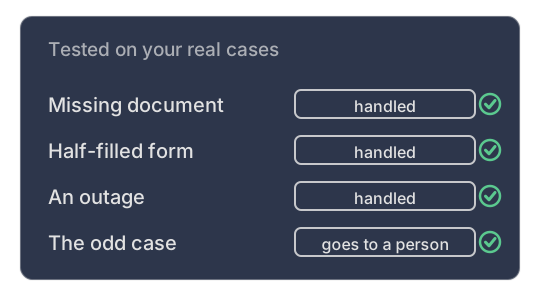
Before launch, it's tested on real work: missing documents, half-filled forms, odd cases, things it should refuse, and outages. It's ready when it handles your real cases, not a clean demo, and anything it can't handle goes to a person.

The job picks the tools. That might be something you already pay for, a basic automation, a product, AI, or custom code, whichever is simplest. AI drafts, sorts, and looks things up where it fits the way the work actually runs.
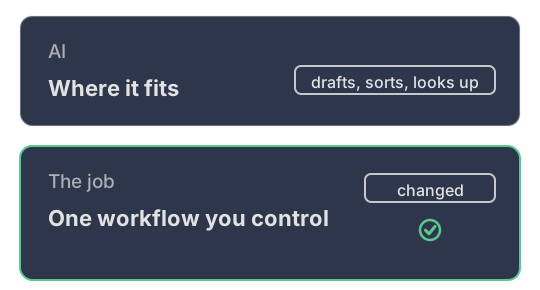

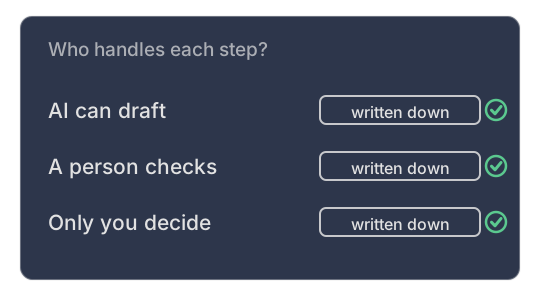
Before anything is built, it's written down: what AI can draft, what a person has to check, and what only you decide. You review the decisions that should stay with you, and everything else has a clear owner.

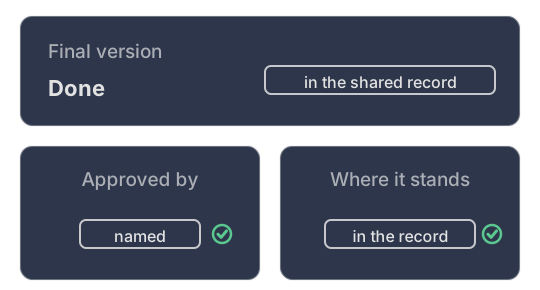
The right information and systems are connected, with permissions, logs, and approval steps. Every result, and who approved it, lands where your team can find it, not in one person's inbox or chat.

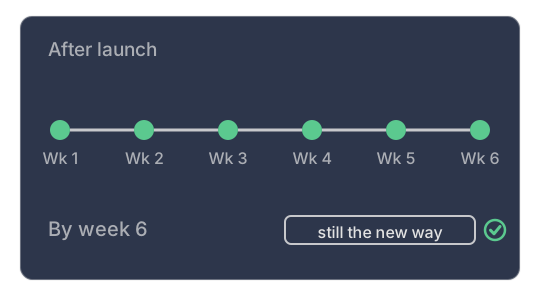
I support your team while it's live, check failures and workarounds, fix what needs fixing, and measure the result. More than one person can run it and take it over, and the old way is retired or kept only as a written backup.
How it works
Every step, and what gets paid at each one.
Included




Straight shooter
Every yearly cost, who bills you, and whether you need it. These are estimates. You pay each vendor directly, at their price, with no markup.
The offer
The price depends on the job, the data it touches, and what happens if it goes wrong, so it's quoted once those are clear and before any work starts.
Modern digital infrastructure
Modular architecture that supports complex projects while remaining maintainable and scalable.
Shared components and conventions that accelerate delivery, reduce errors, and preserve consistency.
Engineered for complex layouts, continuous evolution, and long-term performance.

Your team can run and fix the job through the new workflow, the hard cases pass, approvals and backups work, and the old way is no longer the default.
Read both columns before you reach out. If the right side sounds like you, something else will serve you better, and I'll say so.